FabFilter Saturn 2 alternatives, sorted by how you use it
Alternatives to FabFilter Saturn 2 for every way you use it: buses and masters, Mid/Side, bass, sound design and modulation. Free options and stock tools too.
By CrystalKarat9 min read
FabFilter Saturn 2 is the multiband saturator other multiband saturators are measured against, and it is a fair question why anyone would want something else. The usual answers are the time it takes to set up, the price, or the fact that most people only use one corner of it. This guide sorts the alternatives by that corner, because the right replacement for someone who uses Saturn 2 on the master is a different plugin from the right one for someone who uses it to destroy a bass.
Quick picks
- 01ForgeCrystalKaratSaturn 2’s six bands, with the setup done for you from your own audio$49
- 02TrashiZotopeSound design, where Saturn 2’s heavier styles are what you useMid-price
- 03bx_saturator V2BrainworxMid/Side saturation on finished mixesMid-price
- 04MSaturatorMBMeldaProductionSaturn 2’s depth at a budget priceBudget
- 05ThermalOutputSaturation you play, like Saturn 2’s XY padMid-price
- 06MultipassKiloheartsBuilding your own Saturn 2 from modulesMid-price
- 07Ozone ExciteriZotopeWhen you only used Saturn 2 for mastering polishPart of a suite or DAW
What Saturn 2 does well
Saturn 2 splits the signal into up to six bands, with crossovers from 6 to 48 dB per octave and an optional linear-phase mode, and gives each band any of 28 styles across tape, tube, transformer, amp and effect families. Every band has its own drive, feedback, dynamics, tone, level and mix, and can run on the mid or the side. Then comes the modulation: drag an XLFO, an envelope generator, an envelope follower, an XY controller or a MIDI source onto any control of any band. It runs in every format, including AAX and CLAP.
That combination is why it is the reference. No single feature is unique, but nothing else has all of them in one interface this clear.
Why people look for an alternative
- It starts from nothing. Where the crossovers go, which style goes in which band and how hard each one is driven are all yours to decide, every time. A preset gets you somewhere, but not somewhere that knows your track.
- Price. It sits in the mid-price band, more in the bundles, and plenty of people only need a fraction of it.
- You use one corner of it. If you only use it on the master, or only for heavy distortion, or only for its modulation, a specialist does that one job as well or better.
- You want a different sound. After a few years on every session, its styles become familiar, and a new set of curves is a reason in itself.
The best Saturn 2 alternatives
Ranked by how much of Saturn 2’s range each covers, then by what it does better. A narrower tool lower down can still be the best replacement for the way you work.
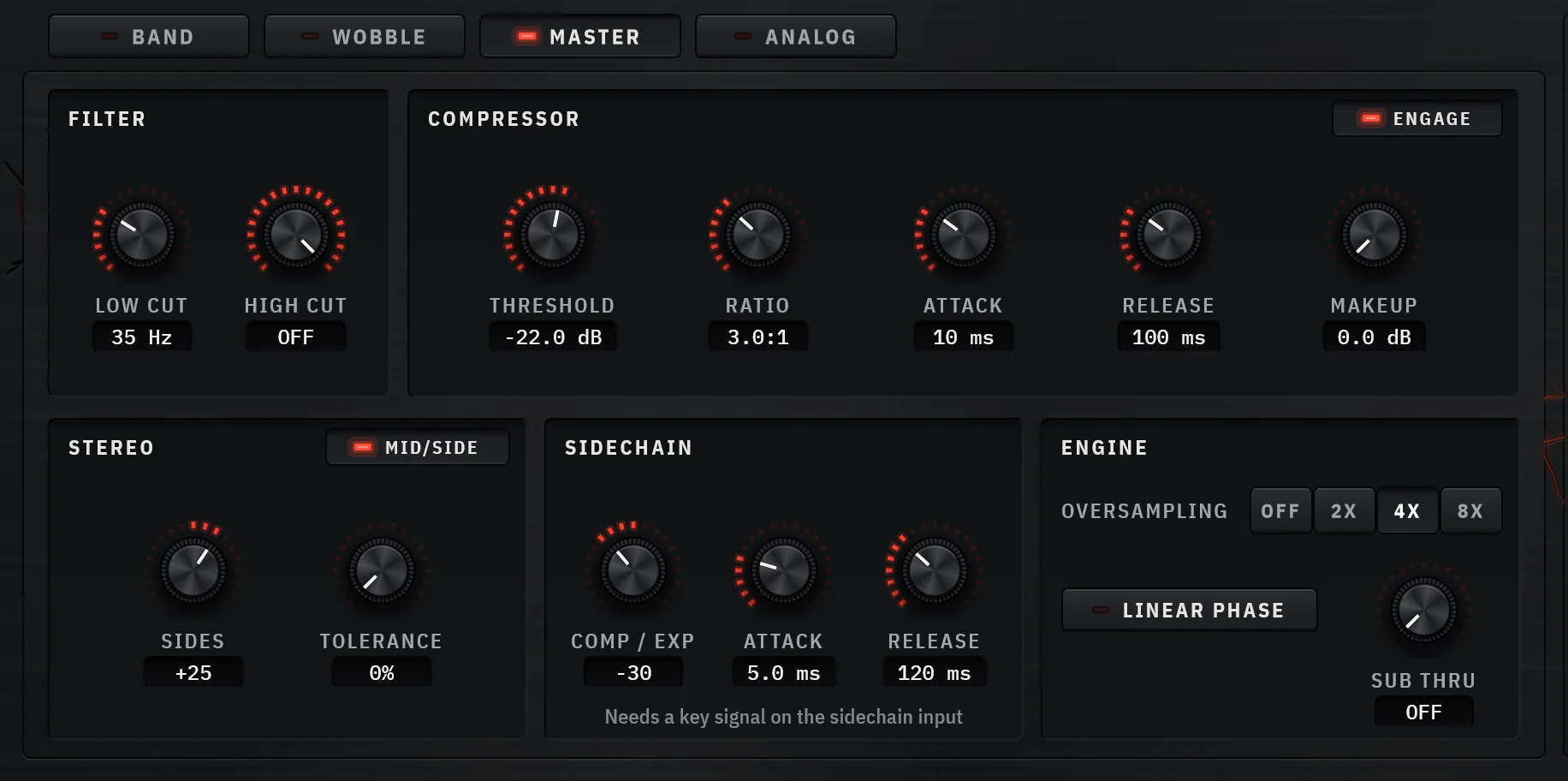
01Forgeby CrystalKarat
Multiband saturatorBest for: Saturn 2’s six bands, with the setup done for you from your own audio
Forge is the alternative closest to Saturn 2 in scope: up to six bands, crossovers at 6, 12, 24 or 48 dB per octave set per crossover, and any of ten characters on any band, from Warm Tape, Clean Tape, Tube and Transformer through Amp and two distortions to Bit Crush, Destroy and Soft Clip. Each band has its own drive up to +36 dB, bias, tone, dynamics, clip, mix and one of seven insert effects, and the bands can run in L/R or Mid/Side with their own width.
Where it differs is the first five minutes. Saturn 2 opens on a blank canvas; Analyze listens to four seconds of your track, puts a band on every register the material reaches, moves each crossover into a valley of the spectrum so no note is split in two, calibrates every band’s drive to the target you picked (Warm, Punch, Air, Grit, Crush or Master) and matches the output to the input’s loudness. You start from a sound that already suits the track and refine it, and one Undo takes it all back.
Why pick it
- Six bands and ten characters, like-for-like with Saturn 2’s scope
- Analyze places the crossovers and sets every band’s drive from your audio
- A phase-matched dry path and flat-summing crossovers at every slope
- Per-band sidechain, an insert effect per band, and an Analog section of worn-gear noise
Know first
- No AAX or CLAP, so not in Pro Tools, and VST3 or AU only
- Wobble is pattern-based: no envelope follower, MIDI or XY source to drag onto a control
- Ten characters to Saturn 2’s 28 styles
- Price
- $49 once, or with Studio Pass · 7-day trial, no card
- Formats
- Windows VST3 · macOS VST3 and AU
Forge is ours: CrystalKarat makes it and publishes this blog. Everything else on this list is another company's, and nobody paid to be on it.
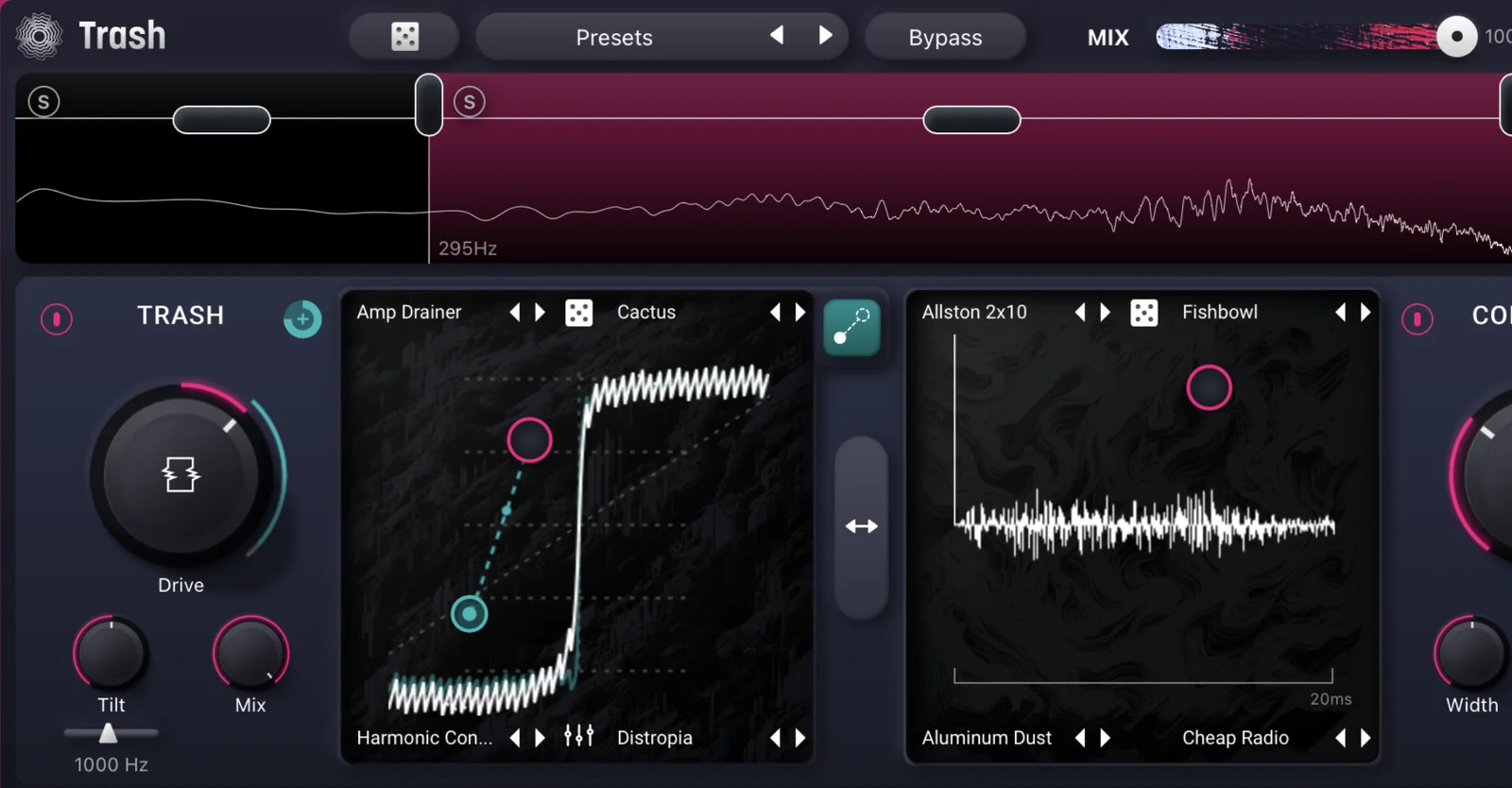
Trash. Image: iZotope 02Trashby iZotope
Multiband distortion and convolutionBest for: Sound design, where Saturn 2’s heavier styles are what you use
If you reach for Saturn 2 to wreck things rather than warm them, Trash is the better instrument. The 2024 rebuild works across one, two or three bands, each with a Trash module that blends between distortion types and a Convolve module of impulse responses (speakers, objects, spaces), with over 600 distortions and IRs between them and an envelope follower to move them. It is less suited to the gentle tape-on-the-mix jobs Saturn 2 also does.
Why pick it
- A far bigger palette of distortion than Saturn 2’s amp and heavy styles
- Convolution in every band
- Trash Lite gives you the core module free
Know first
- Three bands at most
- Not the tool for subtle colour on a bus or a master
Mid-price · Trash Lite, a single-band version, is free
iZotope's page for Trash (opens in a new tab)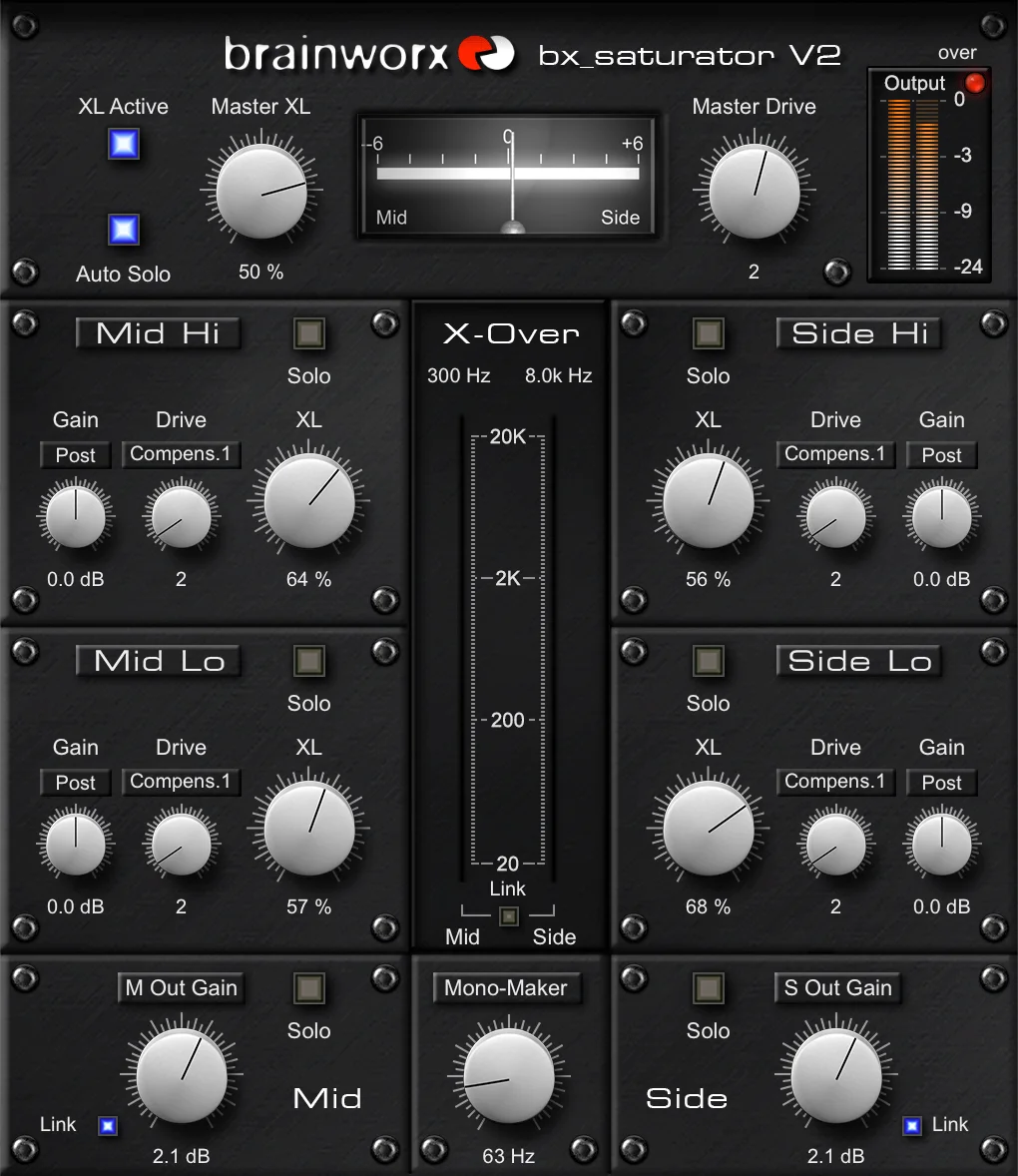
bx_saturator V2. Image: Plugin Alliance 03bx_saturator V2by Brainworx
Multiband Mid/Side saturationBest for: Mid/Side saturation on finished mixes
If your Saturn 2 lives on the master in Mid/Side, bx_saturator V2 is built for exactly that. It saturates the middle and the sides independently, each split in two by a crossover that keeps them in phase, and its Mono Maker folds the lowest frequencies to mono so you can widen and drive the rest without the low end wandering. Narrower than Saturn 2 everywhere else, and very good at this one job.
Why pick it
- Designed around Mid/Side from the start
- Mono Maker for a solid low end
- In Plugin Alliance’s subscriptions
Know first
- Two bands each for Mid and Side, not a free number of bands
- A narrower set of saturation flavours
Mid-price · Sold by Plugin Alliance, often discounted; in its subscriptions
Brainworx's page for bx_saturator V2 (opens in a new tab)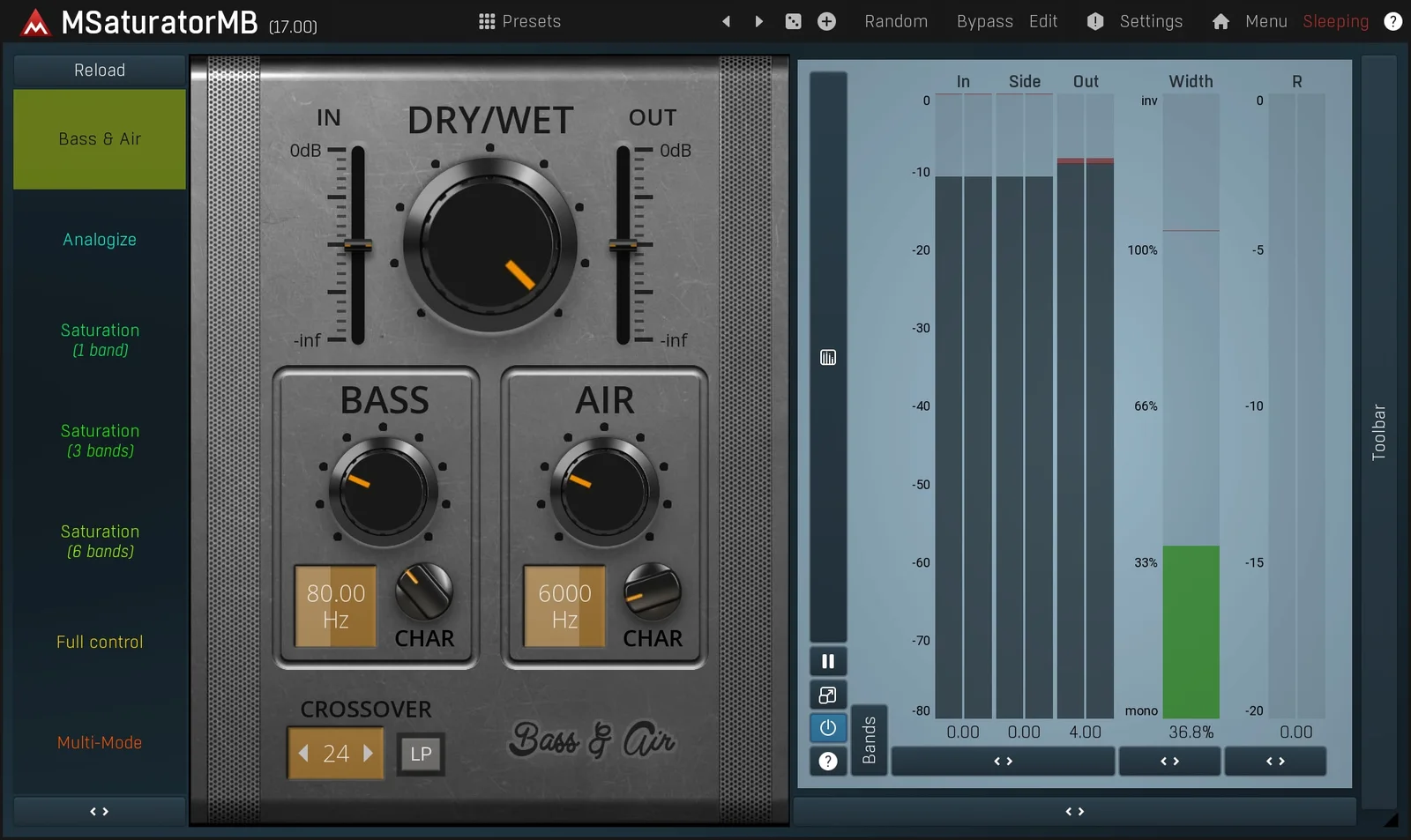
MSaturatorMB. Image: MeldaProduction 04MSaturatorMBby MeldaProduction
Multiband saturationBest for: Saturn 2’s depth at a budget price
MeldaProduction’s multiband saturator has as many options as Saturn 2 and then some, with the company’s modulators to move them, for less money. The cost is the interface: its easy screen hides most of it, and the full editor is dense. The single-band MSaturator is free, so you can learn the sound before you pay for the bands.
Why pick it
- Low price
- Deep editing and modulation
- A free single-band version to try
Know first
- The full editor is dense
- Slower to a good sound than its price suggests
Budget · The single-band MSaturator is free
MeldaProduction's page for MSaturatorMB (opens in a new tab)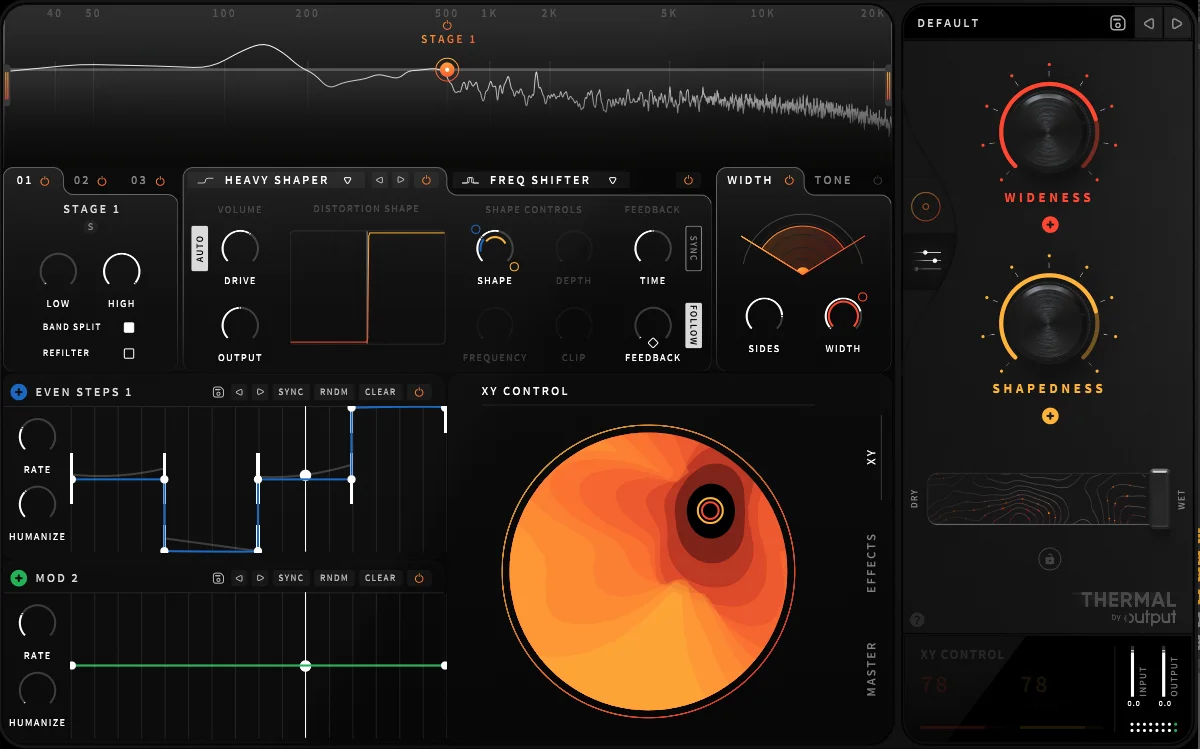
Thermal. Image: Output (via CDM) 05Thermalby Output
Multi-stage distortionBest for: Saturation you play, like Saturn 2’s XY pad
Thermal’s three distortion stages can each be limited to a frequency range of its own, apart or overlapping, with an effect slot in every stage, a master compressor and filter, and an XY pad that moves several parameters at once. If Saturn 2’s modulation is what you love, Thermal makes movement the point. Its ranges are set stage by stage rather than by a shared crossover, so a clean split of the whole spectrum is up to you.
Why pick it
- Playable XY control
- Effects inside every stage
- Over 250 presets
Know first
- Filtered ranges rather than crossover bands
- Three stages, not six bands
Mid-price · Also part of the Output One subscription
Output's page for Thermal (opens in a new tab)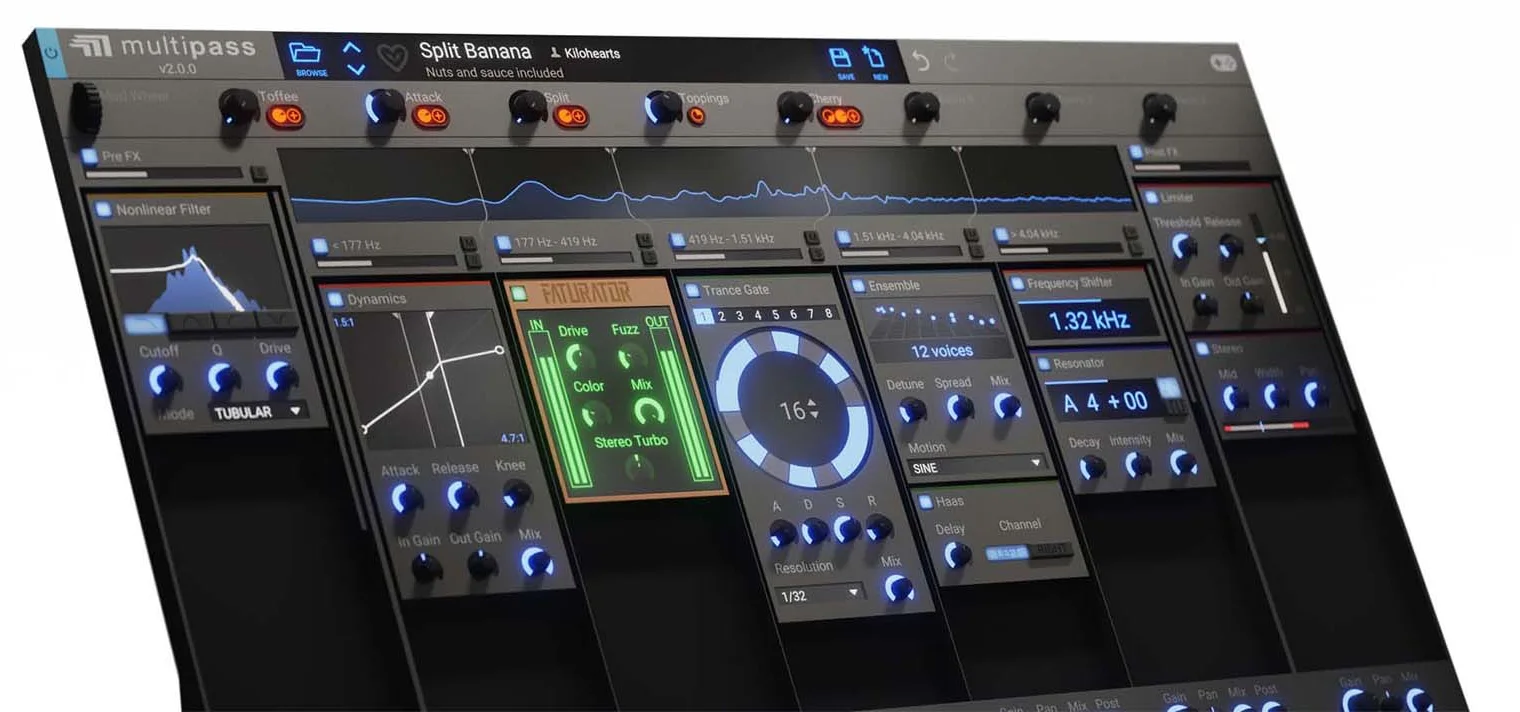
Multipass. Image: Kilohearts 06Multipassby Kilohearts
Multiband effect hostBest for: Building your own Saturn 2 from modules
Multipass splits the signal into up to five bands and hosts a chain of Kilohearts snapins on each one, distortion among them, with modulators you can route to anything. It is closer to Saturn 2’s philosophy than anything here, everything left to you, and further from it in that the saturation itself comes from whichever snapins you own.
Why pick it
- Any effect in any band
- Modular modulation
Know first
- You assemble everything yourself
- The best saturation snapins cost extra
Mid-price · Also in the Kilohearts subscription
Kilohearts's page for Multipass (opens in a new tab)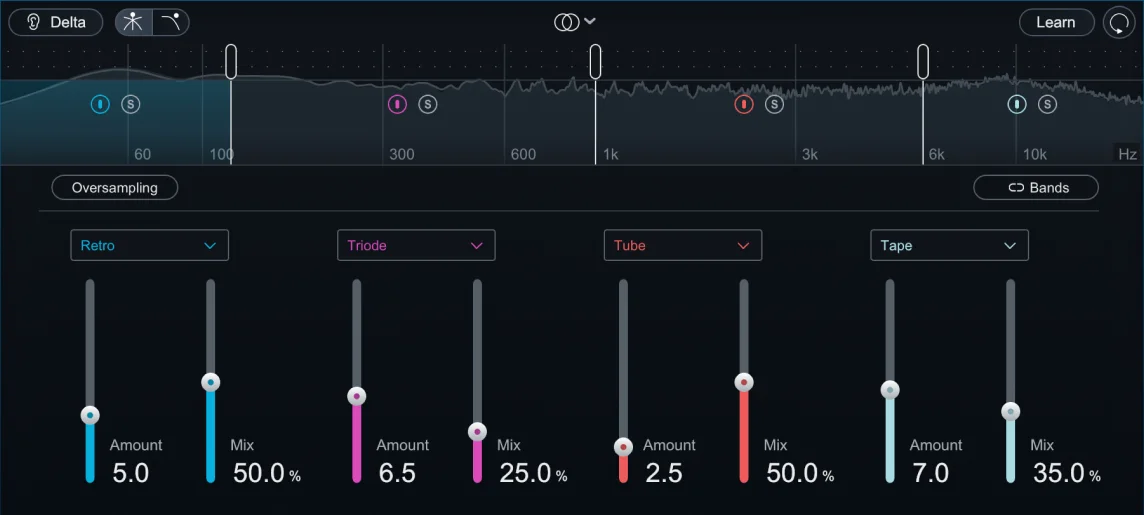
Ozone Exciter. Image: iZotope 07Ozone Exciterby iZotope
Multiband harmonic exciterBest for: When you only used Saturn 2 for mastering polish
If Saturn 2 only ever ran in light tape on your master, and you already own Ozone, its Exciter does that job: up to four bands with adjustable crossovers, a mode per band (Analog, Retro, Tape, Tube, Warm, Triode and Dual Triode), oversampling and a Delta button to hear only what it adds.
Why pick it
- Four bands with a mode per band
- Sits inside the rest of the Ozone chain
Know first
- Only part of Ozone
- Built for polish, not heavy colour
Part of a suite or DAW · Part of Ozone Standard and Advanced
iZotope's page for Ozone Exciter (opens in a new tab)
Free alternatives, and what your DAW has
- Fire: the closest free answer. Up to four bands, each with its own drive, shape, compression and width, digital shapes and analog-style colours, with delays, reverbs and LFO modulation in version 2. Open source under the AGPL.
- iZotope Trash Lite: one band of Trash, free, for the heavy end of Saturn 2.
- Klanghelm IVGI: not multiband, but its Response control makes the saturation frequency-dependent, which covers a lot of what people use Saturn 2’s band split for on single tracks.
- Your DAW: Ableton’s Roar (Live 12 Suite) has a multiband mode with a shaper on each of three bands, Cubase’s Quadrafuzz v2 distorts up to four bands, and FL Studio’s Frequency Splitter in Patcher lets you build your own. Our stock multiband saturation guide shows how in each DAW.
Matching what you use Saturn 2 for
If you know Saturn 2 by the jobs you give it, this is where each job goes instead. None is a copy; each is a starting point in the same neighbourhood.
| What you use Saturn 2 for | Start here instead |
|---|---|
| Warmth on a bus or a master, lows kept clean | Forge (Analyze on Warm or Master), Ozone Exciter if you own Ozone |
| Mid/Side work on finished mixes | bx_saturator V2, Forge in Mid/Side |
| Growl on a bass or an 808 without touching the sub | Forge with its sub passthrough, Fire, Roar’s multiband mode |
| Heavy distortion and sound design | Trash, Trash Lite free |
| Saturation that moves with the music | Thermal, Multipass, MSaturatorMB; Forge’s Wobble for tempo-synced patterns |
Which to choose
- You want the same scope without setting it all up: Forge.
- You want the same depth for less: MSaturatorMB, if you can live with its editor.
- You only master with it: bx_saturator V2, or Ozone’s Exciter if you already have Ozone.
- You only destroy things with it: Trash.
- You love the modulation most: Thermal or Multipass. Nothing matches Saturn 2 here, so if this is your reason, Saturn 2 may still be the answer.
- You want to spend nothing: Fire, or your DAW’s own tools.
If Forge and Saturn 2 are the two on your list, see Forge vs Saturn 2 for a side-by-side. For the whole field, see our multiband saturation roundup.
Questions
What is the best alternative to FabFilter Saturn 2?
Forge is the closest in scope, with six bands and ten characters per band, and sets the crossovers and drive from your own audio with Analyze. For sound design, iZotope Trash goes further; for Mid/Side mastering, bx_saturator V2; for the same depth on a budget, MeldaProduction's MSaturatorMB.
Is there a free alternative to Saturn 2?
Fire is the closest free one: an open-source multiband distortion with up to four bands, each with its own drive, shape, compression and width. Ableton Live 12 Suite's Roar and Cubase's Quadrafuzz v2 are multiband saturators you may already own.
Is Saturn 2 worth it?
If you use its modulation, yes: no other multiband saturator lets you drag an envelope follower, LFO, XY pad or MIDI source onto any control as easily. If you mostly set a few bands of warmth and leave them, a simpler or cheaper tool will do the same job.
Does Saturn 2 have a linear-phase mode?
Yes, its crossovers can run in linear phase, which avoids phase rotation between bands at the cost of latency and some pre-ringing on transients. Minimum-phase crossovers that are compensated to sum flat, as most multiband saturators use, are fine for most mixing.