Decapitator alternatives: free and paid saturators for every way you use it
Alternatives to Soundtoys Decapitator, sorted by how you use it: subtle warmth, tape, Punish-level drive or loud drums. Free picks and style-by-style matches.
By CrystalKarat9 min read
Decapitator is the saturator everyone has heard of, and for good reason: five styles that each sound right within seconds, a Punish button for when subtle isn’t the brief, and a Mix knob for blending. It is also single-band, premium-priced and fixed in its voicings. This guide sorts the alternatives by what you actually use Decapitator for, because the right replacement for a vocal-warmth user is a different plugin from the right one for a Punish user.
Quick picks
- 01ForgeCrystalKaratDecapitator-style drive where the low end no longer decides everything$49
- 02Saturn 2FabFilterThe most flexible replacement, with multiband and modulationMid-price
- 03SDRR2KlanghelmThe closest feel at a budget priceBudget
- 04True IronKazrogReplacing Decapitator’s subtle settings: iron on every channelBudget
- 05TAIPBaby AudioFast tape colour, the way Decapitator’s A style is usedMid-price
- 06TrashiZotopeReplacing Punish: heavy distortion with more rangeMid-price
- 07SaturateNewfangled AudioWhen you use Decapitator to make drums louderBudget
What Decapitator actually does
Soundtoys built Decapitator’s five styles by analysing hardware. A follows an Ampex 350 tape preamp, E an EMI TG console channel, N a Neve 1057 input stage, and T and P the triode and pentode settings of a Thermionic Culture Vulture. Around them sit Drive, a Tone control from dark to bright, a low cut with a Thump switch that adds a resonant bump, a high cut with a Steep switch, Mix, an Auto button that keeps the output level steady as you drive, and Punish, which adds 20 dB of drive.
That is the whole of it, and the economy is the appeal. The styles are far enough apart that you hear the right one at once, and nothing in the panel needs explaining.
Why people look for an alternative
- It is one band. On anything with a lot of low end, the bass drives the curve for everything above it: push a drum bus until the snare crackles and the kick has already turned to mush. You can high-pass a parallel copy, but that is routing, not a setting.
- The voicings are fixed. There is no bias, no curve control and no dynamics before the curve. You choose a style and a drive, and that is the sound.
- Price. It sits at the premium end, although it is discounted often and comes in the Soundtoys bundles.
- You only use one part of it. If you only ever use it at low drive, or only ever with Punish on, a specialist does that one job better.
The best Decapitator alternatives
Ranked by how much of Decapitator’s range each one covers, then by what it does better. A narrower tool lower down can still be the best replacement for the way you use it.
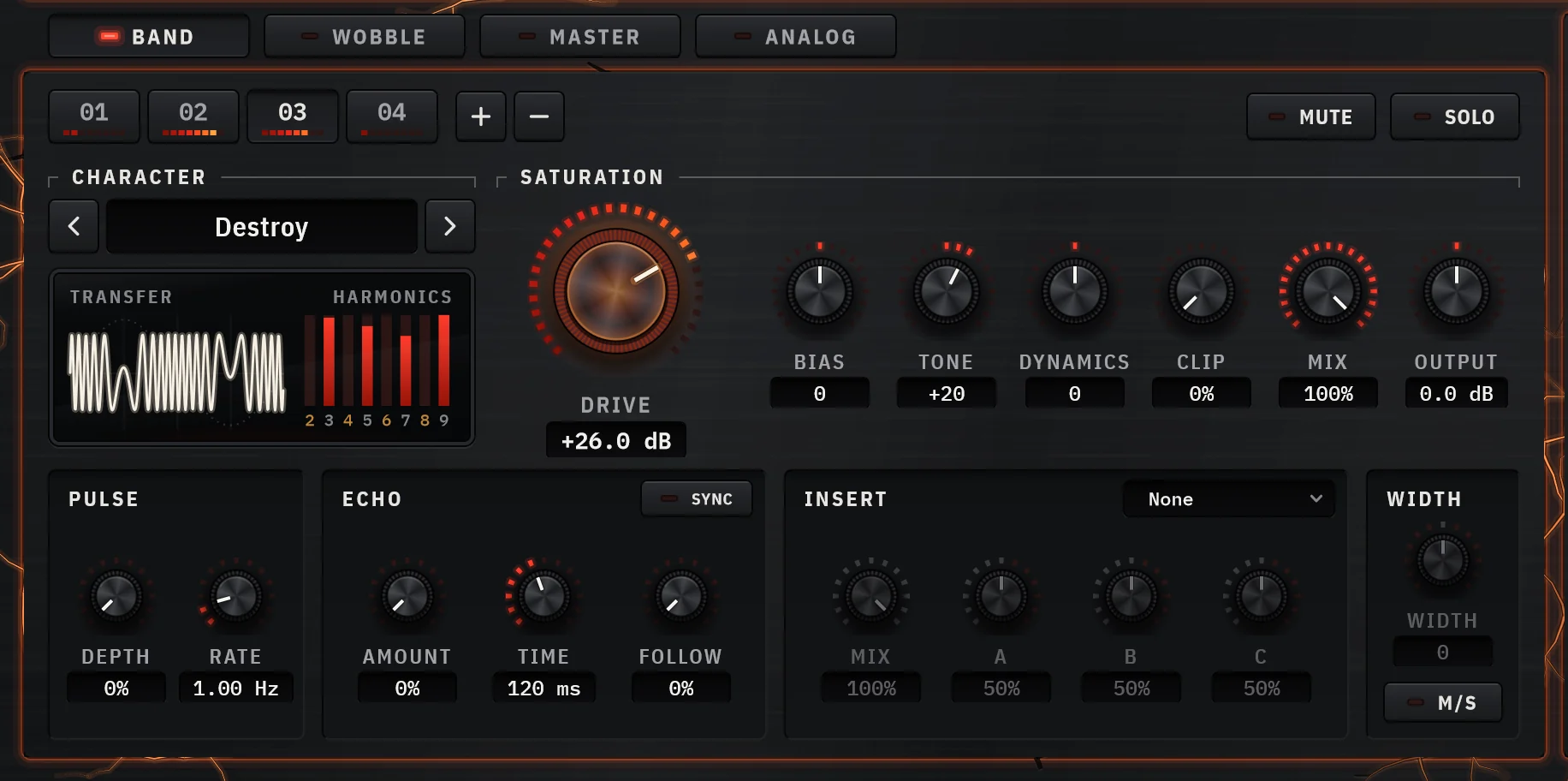
01Forgeby CrystalKarat
Multiband saturatorBest for: Decapitator-style drive where the low end no longer decides everything
Decapitator’s one real limitation is that it is one band: on a full drum bus or a bass, the loudest part of the signal, nearly always the low end, decides how hard the rest is driven. Forge keeps the immediacy and loses that limit. Split the sound into up to six bands and give each one its own character: Transformer or Warm Tape for the iron-and-tape weight of Decapitator’s A and E styles, Tube with a Bias control for the triode end, Amp and the two distortions for the pentode and Punish end, and Soft Clip when the job is really peak control.
Every band has the controls Decapitator has as one set, and a few it doesn’t: Drive up to +36 dB, a Tone tilt, a Mix for parallel blending through a phase-matched dry path, a Clip ceiling, and Dynamics to soften or sharpen transients before they reach the curve. Analyze sets the crossovers and drive from four seconds of your own audio, then level-matches, so the first comparison you make is an honest one.
Why pick it
- Ten characters, any one on any of six bands
- Per-band Mix, Tone, Clip and transient Dynamics
- Analyze calibrates drive to your material and matches the level
- A sub passthrough that keeps the lowest frequencies dry
Know first
- No AAX, so not in Pro Tools yet
- Voiced curves, not analyses of named hardware as Decapitator’s are
- More to set than Decapitator’s single panel, although Analyze gives a starting point
- Price
- $49 once, or with Studio Pass · 7-day trial, no card
- Formats
- Windows VST3 · macOS VST3 and AU
Forge is ours: CrystalKarat makes it and publishes this blog. Everything else on this list is another company's, and nobody paid to be on it.
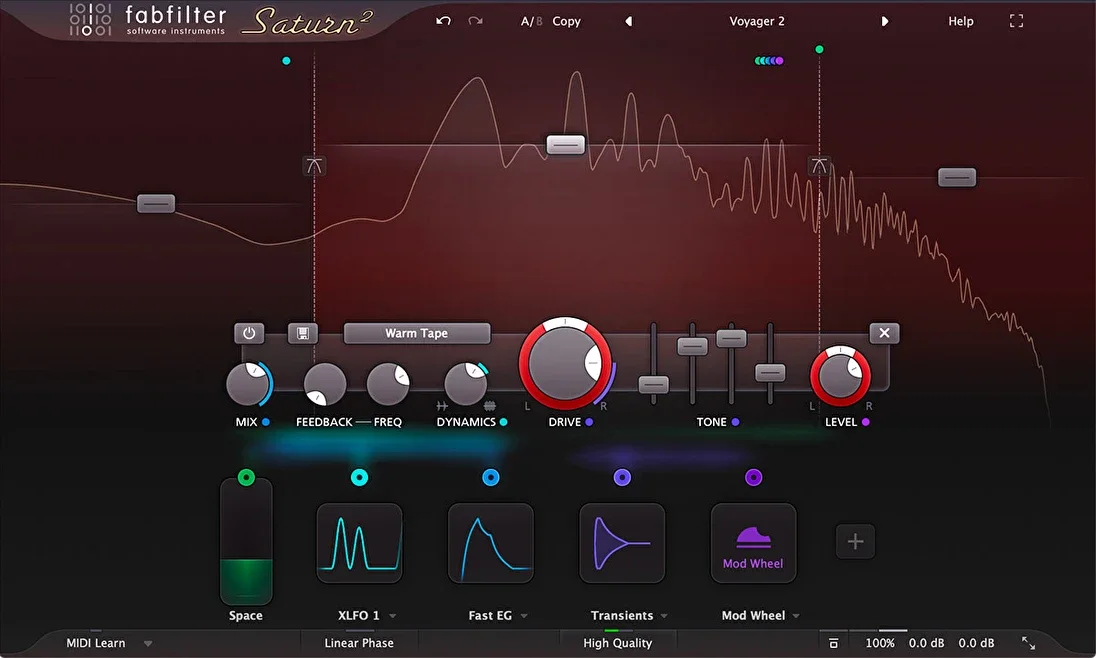
Saturn 2. Image: FabFilter 02Saturn 2by FabFilter
Multiband distortion and saturationBest for: The most flexible replacement, with multiband and modulation
Saturn 2 is the alternative most people mean. Its 28 styles cover everything from subtle tape to amp models, across up to six bands with crossovers from 6 to 48 dB per octave, and its modulation lets envelope followers, LFOs, XY pads and MIDI move any control: drive that follows the snare, tone that opens on the chorus. What it lacks is Decapitator’s speed. Every band, style and drive is yours to set.
Why pick it
- Multiband, so the low end can stay clean
- Deep, visual modulation
- Every format
Know first
- Slower to a good sound than Decapitator
- Nothing calibrates the starting point
Mid-price · Also sold in FabFilter's bundles
FabFilter's page for Saturn 2 (opens in a new tab)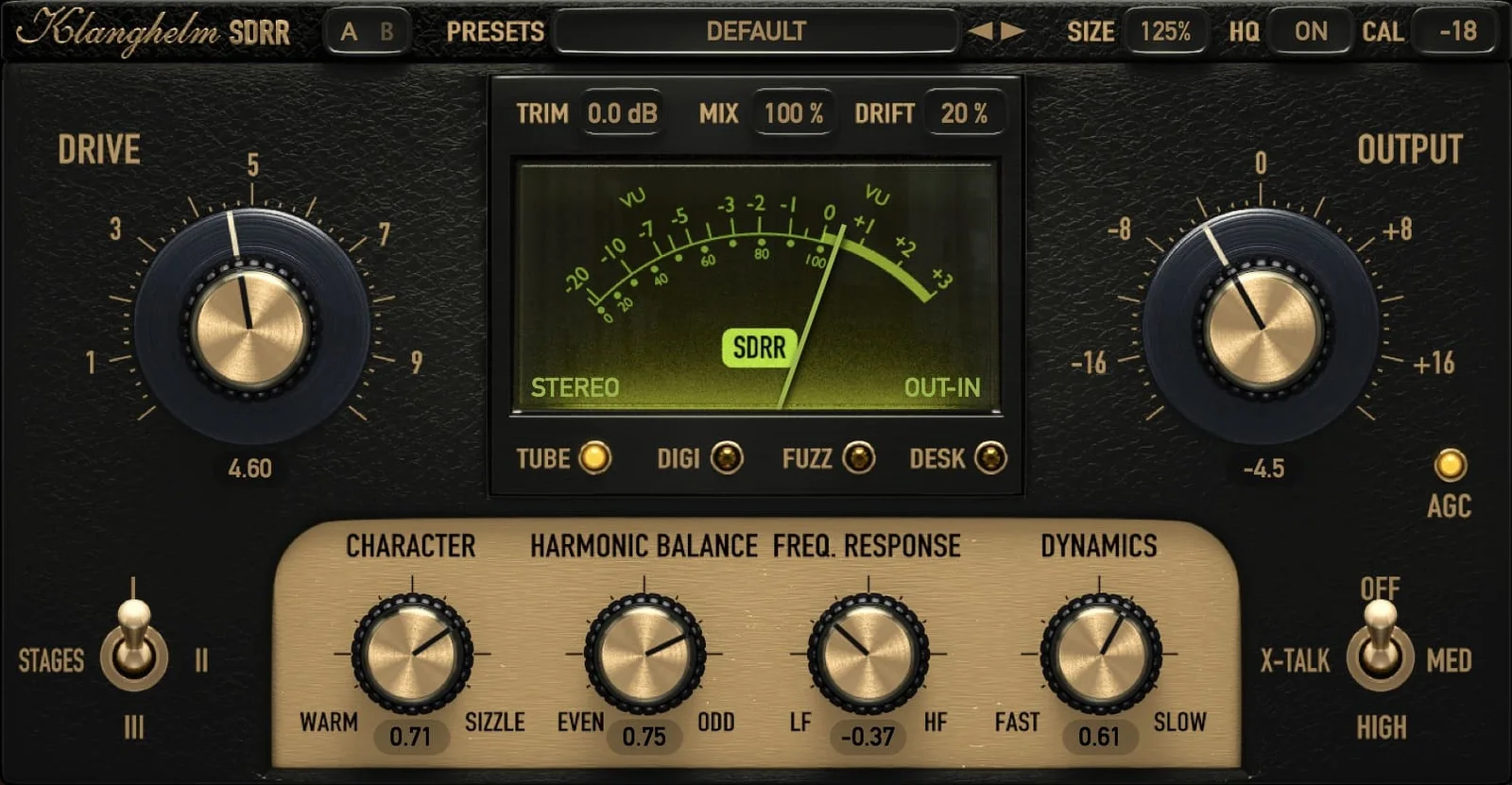
SDRR2. Image: Klanghelm 03SDRR2by Klanghelm
Saturation with four modesBest for: The closest feel at a budget price
SDRR2 is what to buy if you like how Decapitator works and not what it costs. Four modes, Tube, Digi, Fuzz and Desk, cover similar ground to Decapitator’s styles, from console colour to fuzz, with one main drive and a handful of tone controls. Tube is the one most people keep. Take ten minutes with its input calibration and it becomes an everyday saturator.
Why pick it
- Four distinct modes
- Very low price
- Light on the CPU
Know first
- No tape mode
- Input calibration takes a moment to understand
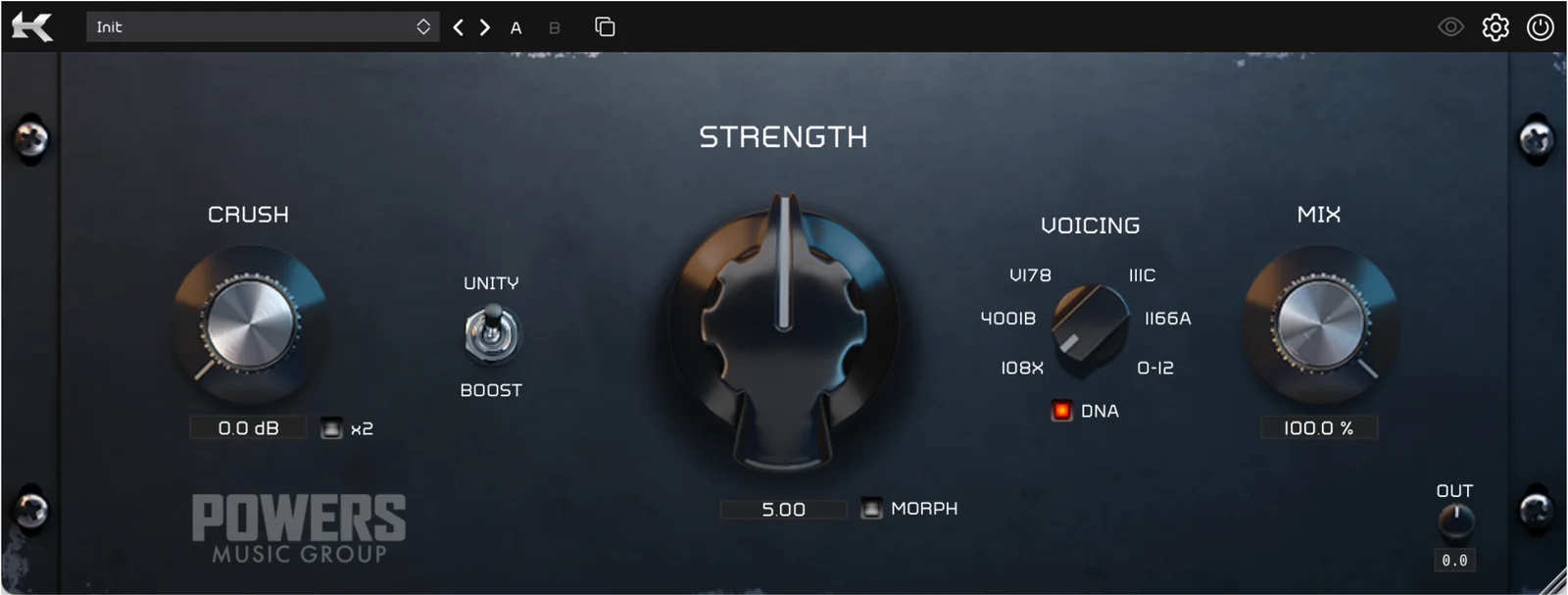
True Iron. Image: Kazrog 04True Ironby Kazrog
Transformer saturationBest for: Replacing Decapitator’s subtle settings: iron on every channel
Plenty of engineers use Decapitator at low drive, for the weight it puts on a vocal or a bass. If that is your use, True Iron does it more cheaply and more lightly: six modelled line transformers, a Crush control for drive, Strength for how much you hear and a Mix for parallel work. It won’t growl, and it isn’t meant to.
Why pick it
- Authentic transformer weight
- Light enough for every track
- Budget price
Know first
- Transformer only
- No tone controls beyond the transformer you pick
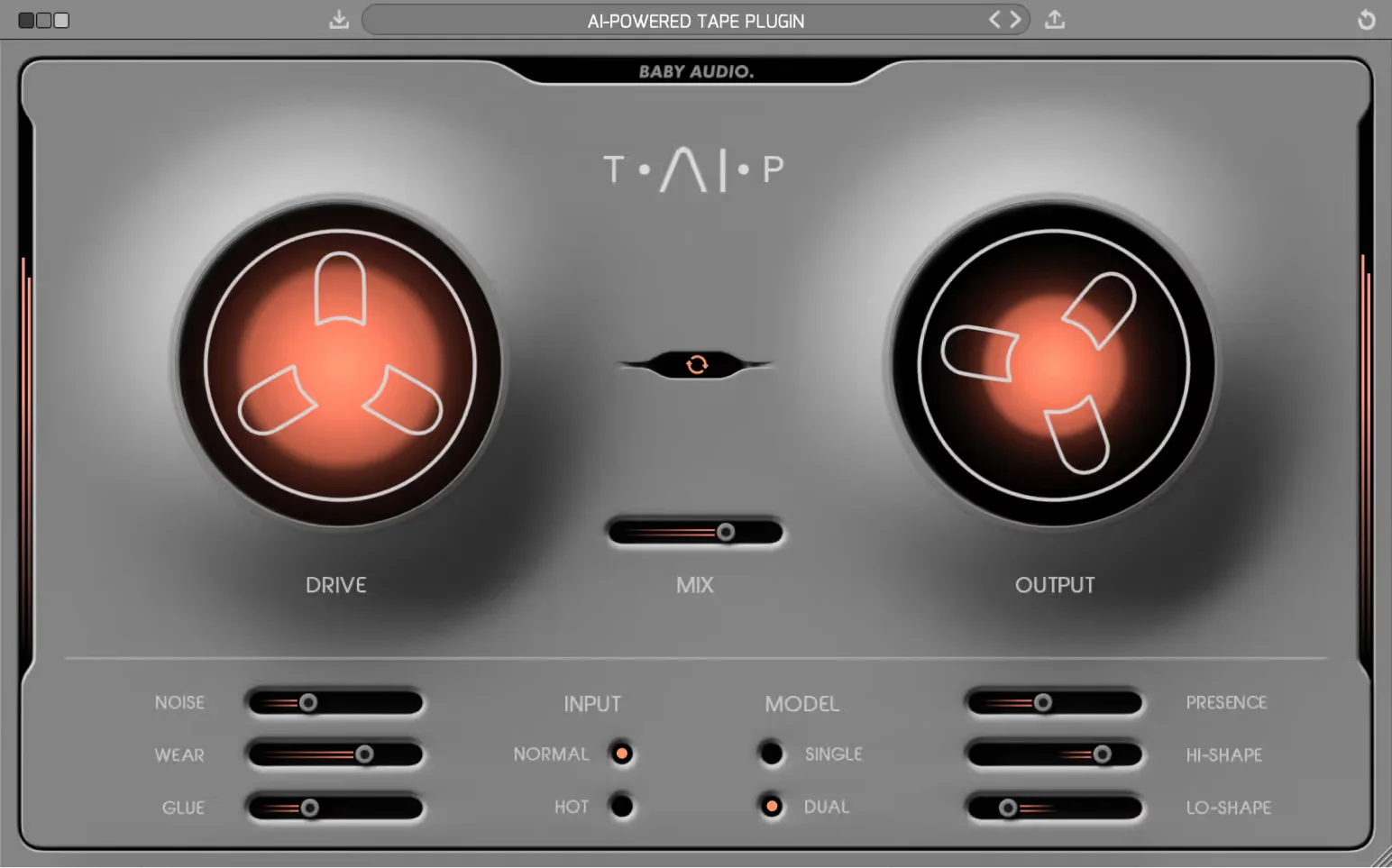
TAIP. Image: Baby Audio 05TAIPby Baby Audio
Neural-network tape saturationBest for: Fast tape colour, the way Decapitator’s A style is used
If you reach for Decapitator’s A style (after an Ampex 350 preamp) for a quick tape-ish lift, TAIP does the tape part with more conviction. Drive, Glue for tape-style compression, and Lo-Shape, Hi-Shape and Presence for the tone, with two machine modes. Few decisions, which is why it is quick.
Why pick it
- Convincing tape with few controls
- Fast to set
Know first
- Tape only
- Single band
Mid-price · Often discounted; also in Baby Audio's subscription
Baby Audio's page for TAIP (opens in a new tab)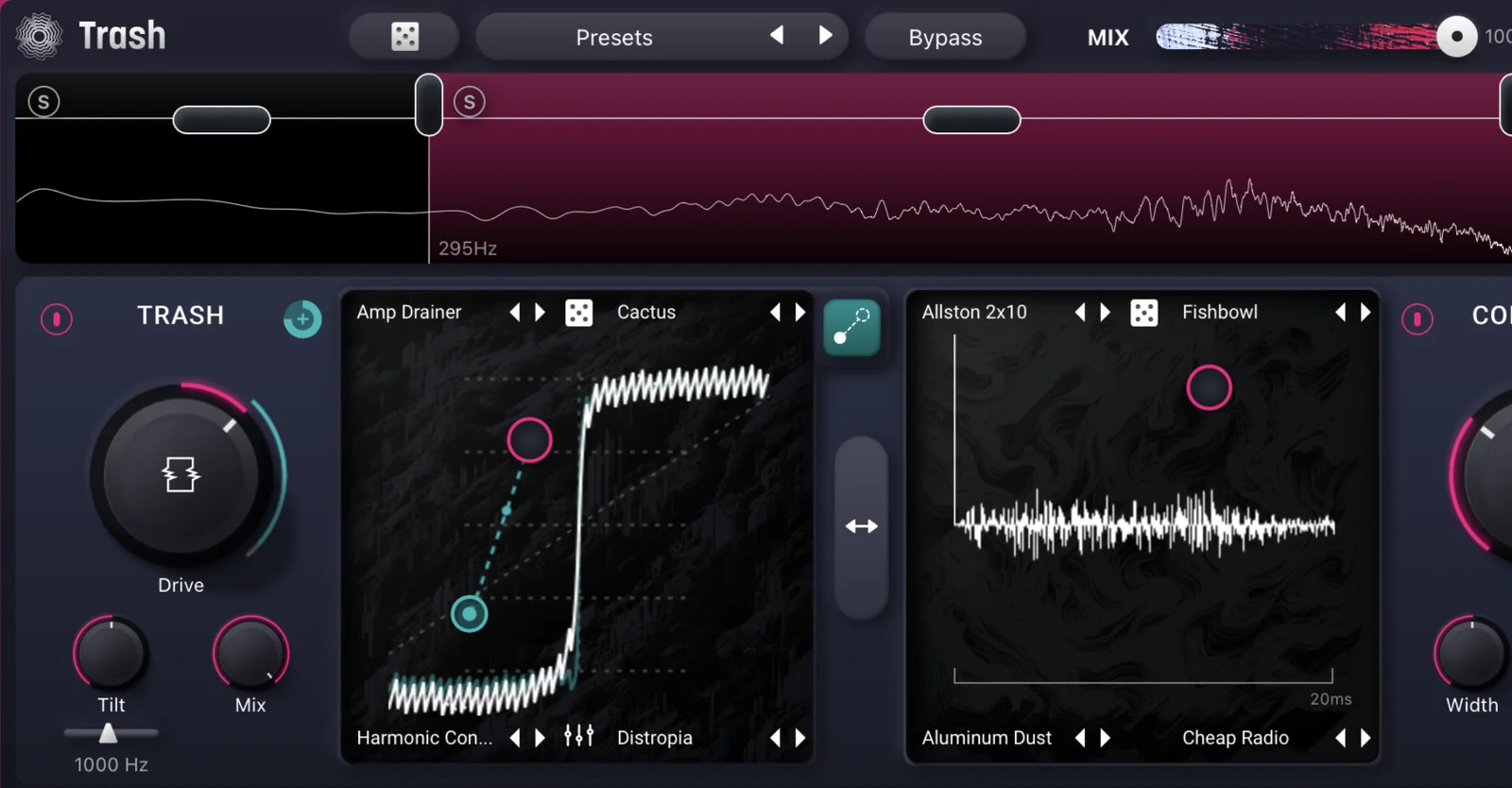
Trash. Image: iZotope 06Trashby iZotope
Multiband distortion and convolutionBest for: Replacing Punish: heavy distortion with more range
If you mostly use Decapitator with Punish on, you want a distortion more than a saturator. Trash has over 60 distortion types and a convolution module of speakers, objects and spaces, across up to three bands, with an envelope follower. It goes much further than Decapitator’s P style, and the free Trash Lite gives you the core of it.
Why pick it
- An enormous palette of distortion
- Free Lite version to try
Know first
- Overkill for subtle colour
- Three bands at most
Mid-price · Trash Lite, a single-band version, is free
iZotope's page for Trash (opens in a new tab)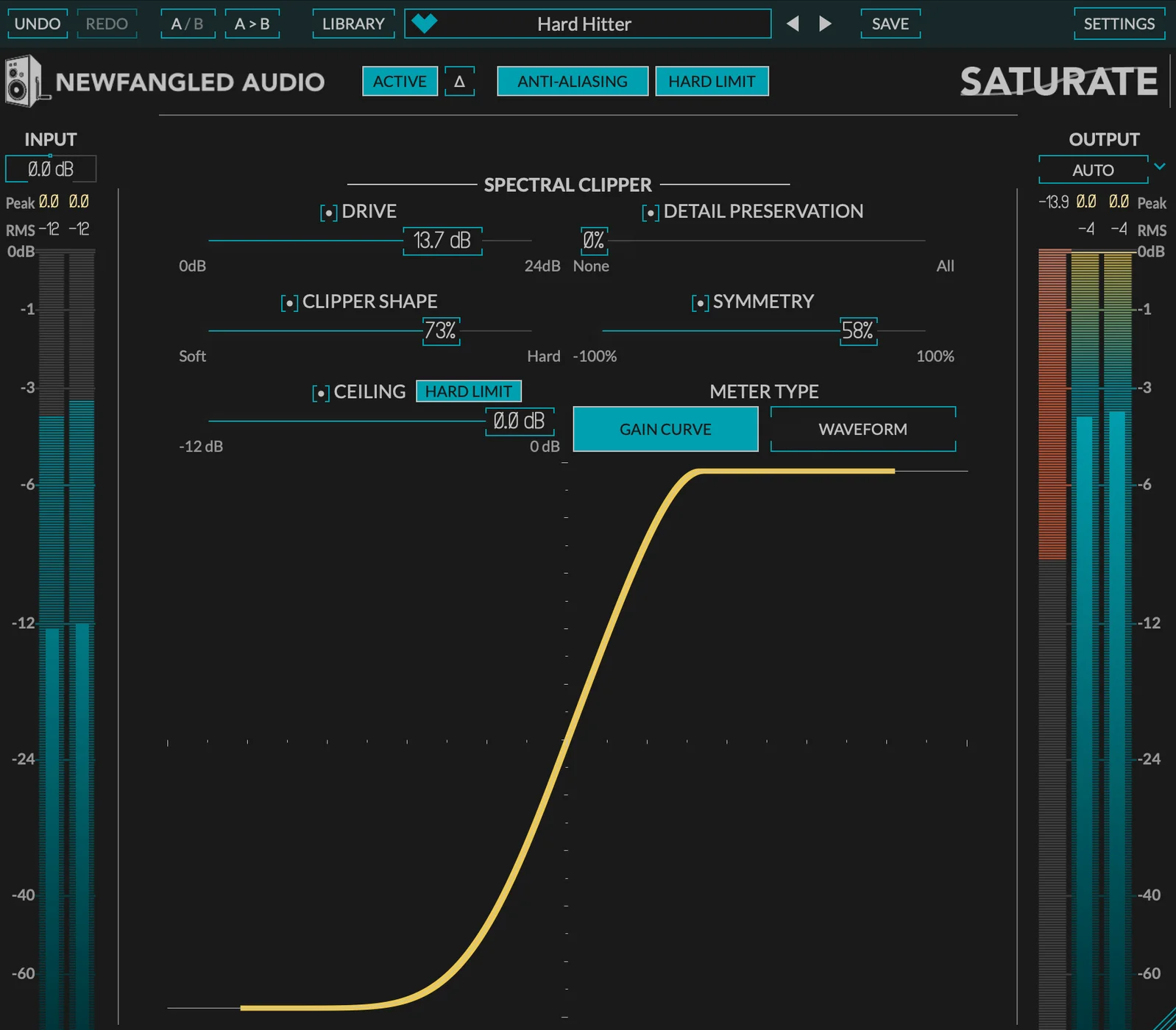
Saturate. Image: Eventide / Newfangled Audio 07Saturateby Newfangled Audio
Spectral clipper and overdriveBest for: When you use Decapitator to make drums louder
Decapitator on a drum bus is often doing loudness more than tone: it flattens peaks and thickens the body. Saturate does that job more transparently. It is a spectral clipper, so it clips without changing the tonal balance, and a Shape control moves from the softest curve to the hardest.
Why pick it
- Loudness without dulling the tone
- Budget price
Know first
- Not the tool for warmth or colour
Free alternatives
- Klanghelm IVGI: the closest free answer to Decapitator’s range, from barely there to properly driven with one control. From the maker of SDRR2.
- Softube Saturation Knob: one knob and three modes. Quick in the way Decapitator is quick; it needs a Softube account and an iLok licence.
- Chowdhury DSP ChowTape: a physically modelled tape machine with hysteresis, open source. More than Decapitator’s A style, if tape is what you’re after.
- iZotope Trash Lite: the core of Trash, free, for the Punish end.
- Stock: Ableton’s Saturator and Roar, Logic’s Overdrive and Phat FX, and FL Studio’s Fruity Soft Clipper and Distructor all cover parts of the range before you spend anything.
Matching Decapitator’s five styles
If you know Decapitator by its letters, this is where each style’s sound lives elsewhere. None is a copy; each is a starting point that gets you into the same neighbourhood.
| Style | What it sounds like | Start here instead |
|---|---|---|
| A (Ampex 350) | Rounded, slightly soft top, thick lows | TAIP, ChowTape, Forge’s Warm Tape |
| E (EMI TG) | Bright, forward console bite | SDRR2’s Desk, Forge’s Transformer with a bright Tone |
| N (Neve 1057) | Weighty, thick mids | True Iron, Forge’s Transformer |
| T (triode) | Warm, even-leaning, the gentlest valve | SDRR2’s Tube, Forge’s Tube with Bias up |
| P (pentode) and Punish | Aggressive, fuzzy, odd-harmonic edge | Trash, Saturn 2’s amp and heavy styles, Forge’s Amp or Soft Distortion |
Which to choose
- You want Decapitator’s speed, cheaper: SDRR2, or IVGI for free.
- You want it without the low end deciding everything: a multiband saturator: Forge if you want the starting point set for you, Saturn 2 if you want to modulate everything.
- You only use it subtly: True Iron or TAIP.
- You only use it with Punish: Trash, or Trash Lite free.
- You use it for loud drums: Saturate.
For the full field, see our guide to the best saturation plugins, or Saturn 2 vs Decapitator if those are the two on your list.
Questions
What is the best free alternative to Decapitator?
Klanghelm IVGI is the closest in range, from subtle to properly driven with one control. Softube's Saturation Knob is as quick to use, and ChowTape is the better free choice if it is Decapitator's tape style you are after.
Is Saturn 2 better than Decapitator?
It does more: multiband processing, 28 styles and deep modulation. Decapitator is faster, with five fixed styles that sound right within seconds. Saturn 2 is better when the low end should stay clean or the saturation should move; Decapitator when you want a result now.
What does Decapitator's Punish button do?
It adds 20 dB of drive, taking Decapitator from saturation into heavy distortion. If you mostly use it with Punish on, a dedicated distortion plugin such as Trash will give you more range.
Can I get Decapitator's sound with a stock plugin?
Partly. Ableton's Saturator, Logic's Overdrive and FL Studio's Soft Clipper all add similar harmonics, but none has Decapitator's five distinct voicings. Drive them gently, blend with a mix control and match the output level when you compare.