How to saturate bass guitar and synth bass without losing the low end
Saturating bass guitar and synth bass: keeping the sub solid, DI to amp tone, Reese and acid basses, which curve to use, and fitting it round the kick.
By CrystalKarat9 min read
A bass that sounds huge on studio monitors can vanish on a laptop, or turn to mush under a busy chorus. Saturation fixes both: it adds the harmonics small speakers can play, and it evens out the level so the bass holds its place. Done badly, it smears the low end and fights the kick. This guide covers bass guitar and synth bass, what each needs, and how to keep the sub solid while you add the growl. For 808s in particular, see our 808 saturation guide.
What saturation does for bass
- Audibility. A bass guitar’s low E is 41 Hz. Most small speakers produce little below 150 Hz, so its fundamental is missing on them. Saturation adds harmonics at 82, 123, 164 Hz and up, and the ear hears the note from them.
- Consistency. Saturation compresses. Notes that jump out and notes that disappear end up closer together, so the bass line reads evenly.
- Character. Warmth, growl, fuzz: the difference between a bass that sits under the track and one that drives it.
Keep the low end solid
The harmonics that make a bass audible on small speakers are harmonics of its fundamental, so the fundamental has to go through the curve. What you protect is a clean copy of the lows underneath, so the weight survives the drive. Three ways to do it:
- Drive the whole bass, and blend with a mix control until the low end is as solid as it was dry.
- A parallel copy, high-passed after the saturator at around 100 to 200 Hz, blended under the dry bass. Only the new harmonics come from the copy.
- Multiband, with a split at around 100 to 150 Hz: light drive and a partial mix on the low band, and the band above driven for character.
Our parallel saturation guide covers the routing and why the dry and wet copies must stay in phase.
Bass guitar: from a thin DI to an amp
A DI bass is honest and a little thin: plenty of fundamental, not much of the midrange that an amp, a mic and a speaker would add. Saturation is the quickest way to put that back.
- Iron on the lows. A transformer or tape curve thickens the bottom first, as real gear does.
- Valve or amp on the mids, 200 Hz to 2 kHz. This is the growl and the note definition: where a bass line is heard in a dense mix.
- Roll off the top. A bass speaker produces little above 4 or 5 kHz. A low-pass there, after the saturation, takes off fret noise and fizz that an amp would never have reproduced.
- Watch the pick attack. Saturation squashes it. If the bass loses its definition, sharpen the transients before the curve or blend some dry back.
Bass is often recorded both DI and through an amp. Saturate the DI to complement the amp, rather than copying it, and check the two are in phase before you blend them.
Synth bass: subs, Reese and acid
Sine and sub basses
A pure sub has no harmonics at all, so it behaves like an 808: saturate it to add them, keep a clean copy of the fundamental, and tune it first, because the harmonics make pitch easy to hear.
Reese and detuned basses
Detuned saws already have harmonics; the job is movement and aggression. Distort the mids, roughly 200 Hz to 3 kHz, leave the sub clean and mono, and let a phaser or slow filter modulation through the distorted band do the moving.
Acid and filtered basses
Distortion before a resonant filter gives the filter new harmonics to sweep; distortion after it makes the resonance scream. The classic acid sound is the second. Either way, drive levels change as the filter moves, so expect the grit to come and go with it.
Choosing the curve
| Sound | Curve | Where |
|---|---|---|
| Weight and warmth | Transformer or tape | The low band, gently |
| Round, melodic | Valve with some asymmetry | Low and low-mid bands |
| Growl and note definition | Amp or soft distortion | 200 Hz to 2 kHz |
| Fuzz | Hard clipping or fuzz | Above 250 Hz, over a clean sub |
| Loud and even | Soft clip into a ceiling | The whole bass, after compression |
Why each curve sounds as it does is in our tape, tube and transistor guide.
Keeping it even from note to note
A saturator drives loud notes harder than quiet ones, so a bass line played unevenly comes out with gritty loud notes and clean quiet ones. Compress before the saturator, so the level into the curve is steadier, and the tone stays consistent. If you also want the peaks held, add a gentle compressor after it too.
Fitting it in the mix
- Keep the lows mono. Width below about 120 Hz smears in mono and on club systems. Spread the harmonics if you like; keep the fundamental centred.
- Make room for the kick. A saturated bass is denser and masks the kick more. Duck the low band from the kick, after the saturator, so only the level moves, not the tone. Our kick and bass guide has the detail.
- Check on a phone or laptop. The bass line should still be clear and in tune on the speakers it was too quiet on.
Plugins for bass
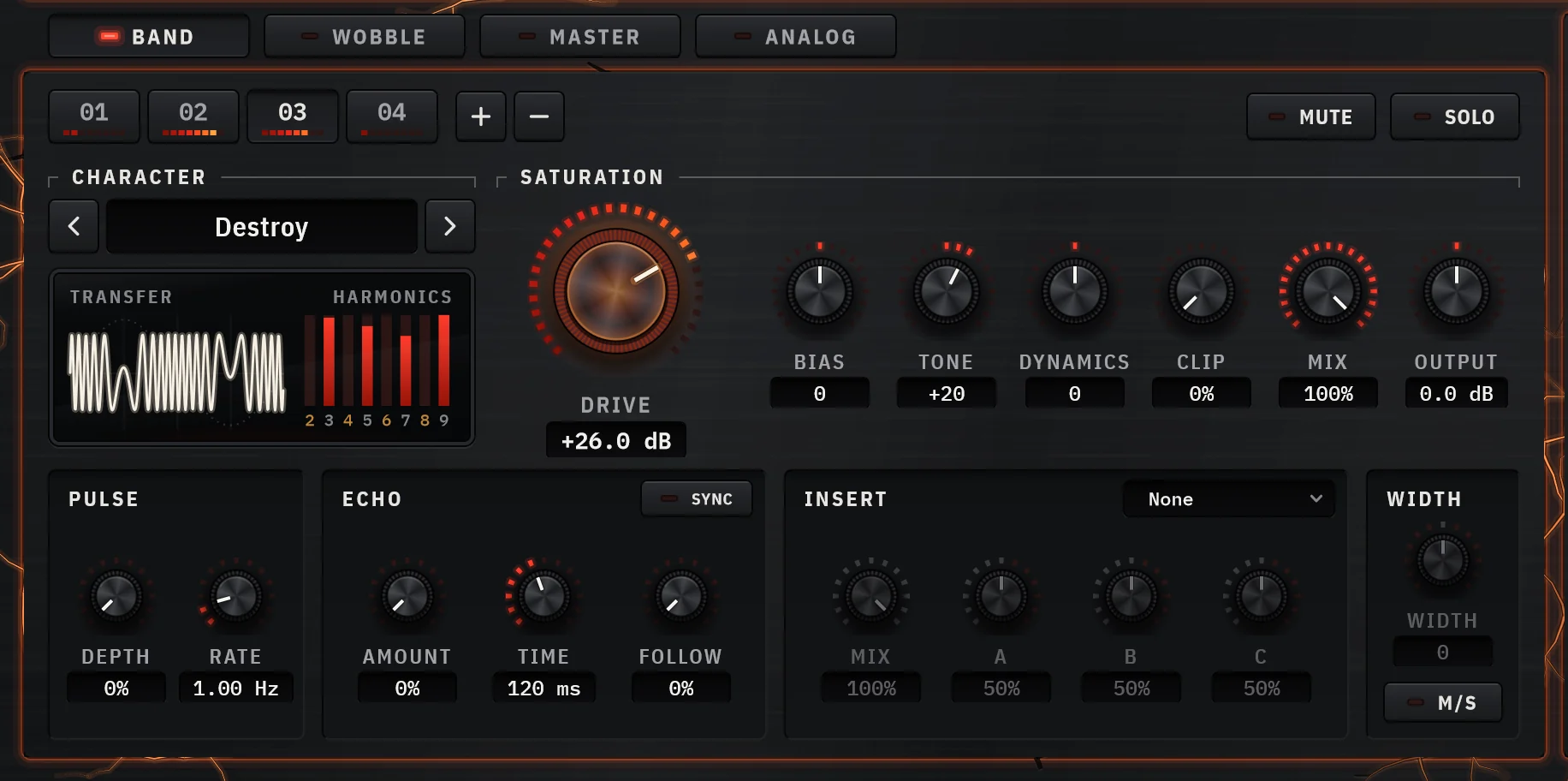
01Forgeby CrystalKarat
Multiband saturatorBest for: Bass saturation with a clean sub, an amp-like middle and a tamed top
Bass is where multiband saturation earns its keep, and Forge’s bass presets show the recipes: DI to Amp turns a thin DI into an amp-and-mic tone with iron on the lows, valve in the mids and a rolled-off top; Growl Bass puts a mid-range snarl over a clean sub; Fuzz Bass fuzzes everything above 250 Hz; Reese Phaser runs slow phasing through a distorted mid band; Bass Tighten softens the transients of a boomy low end.
Transformer and Warm Tape saturate bass before treble, as real iron does, and Tube’s Bias adds even harmonics without more drive. Each band has its own Mix, so the fundamental’s harmonics can sit over a dry copy of the sub. In Mid/Side mode, per-band width keeps the lows mono while the top spreads, and the band-by-band sidechain ducks only the low band from the kick.
Why pick it
- Any character on any band: iron below, valve or amp above
- Per-band Mix and a sub passthrough for a solid low end
- Mono lows and wide harmonics in Mid/Side mode
- Factory bass presets for DI, synth and Reese
Know first
- No AAX for Pro Tools yet
- No amp cabinet simulation: pair it with an IR for a full amp chain
- Price
- $49 once, or with Studio Pass · 7-day trial, no card
- Formats
- Windows VST3 · macOS VST3 and AU
Forge is ours: CrystalKarat makes it and publishes this blog. Everything else on this list is another company's, and nobody paid to be on it.
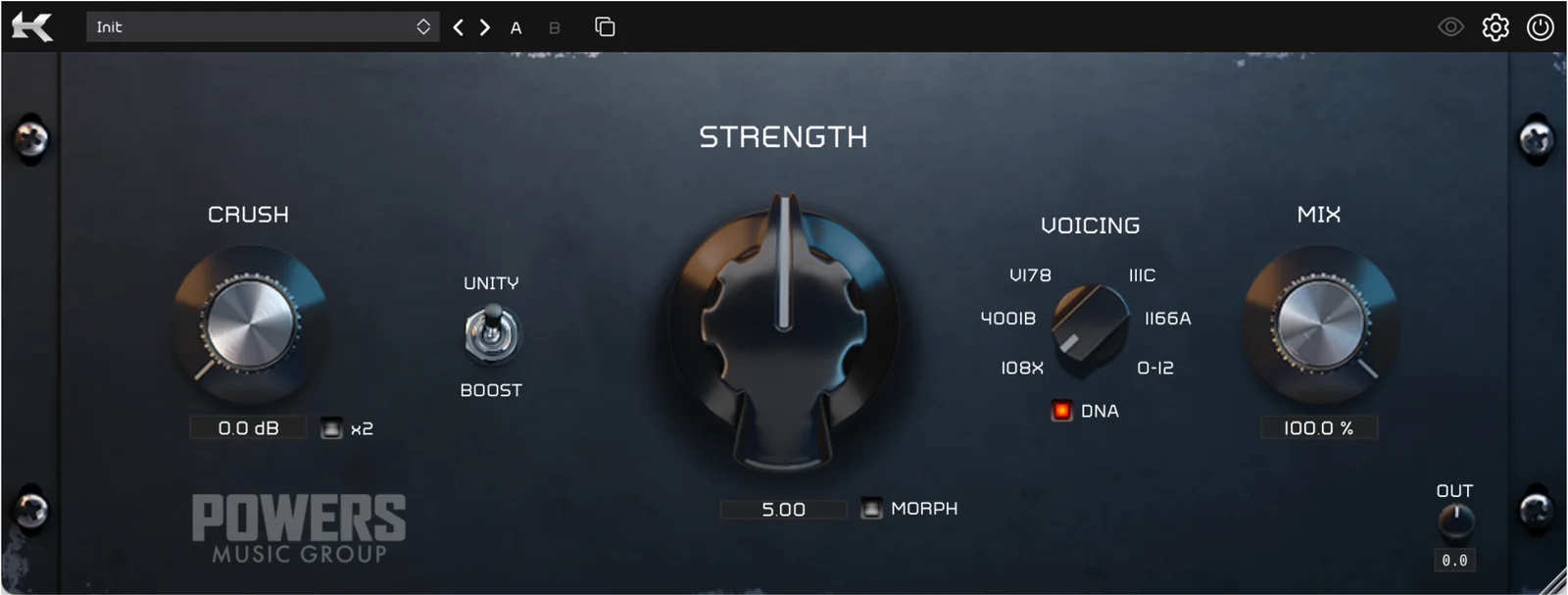
True Iron. Image: Kazrog 02True Ironby Kazrog
Transformer saturationBest for: Transformer weight on bass guitar
Transformers thicken bass before anything else, which is exactly what a DI bass lacks. True Iron gives you six of them, with Crush for drive and Mix for parallel blending. Subtle, authentic and cheap enough to leave on every bass track.
Why pick it
- Authentic low-end iron
- Budget price
Know first
- No grit at the top end
- Single band
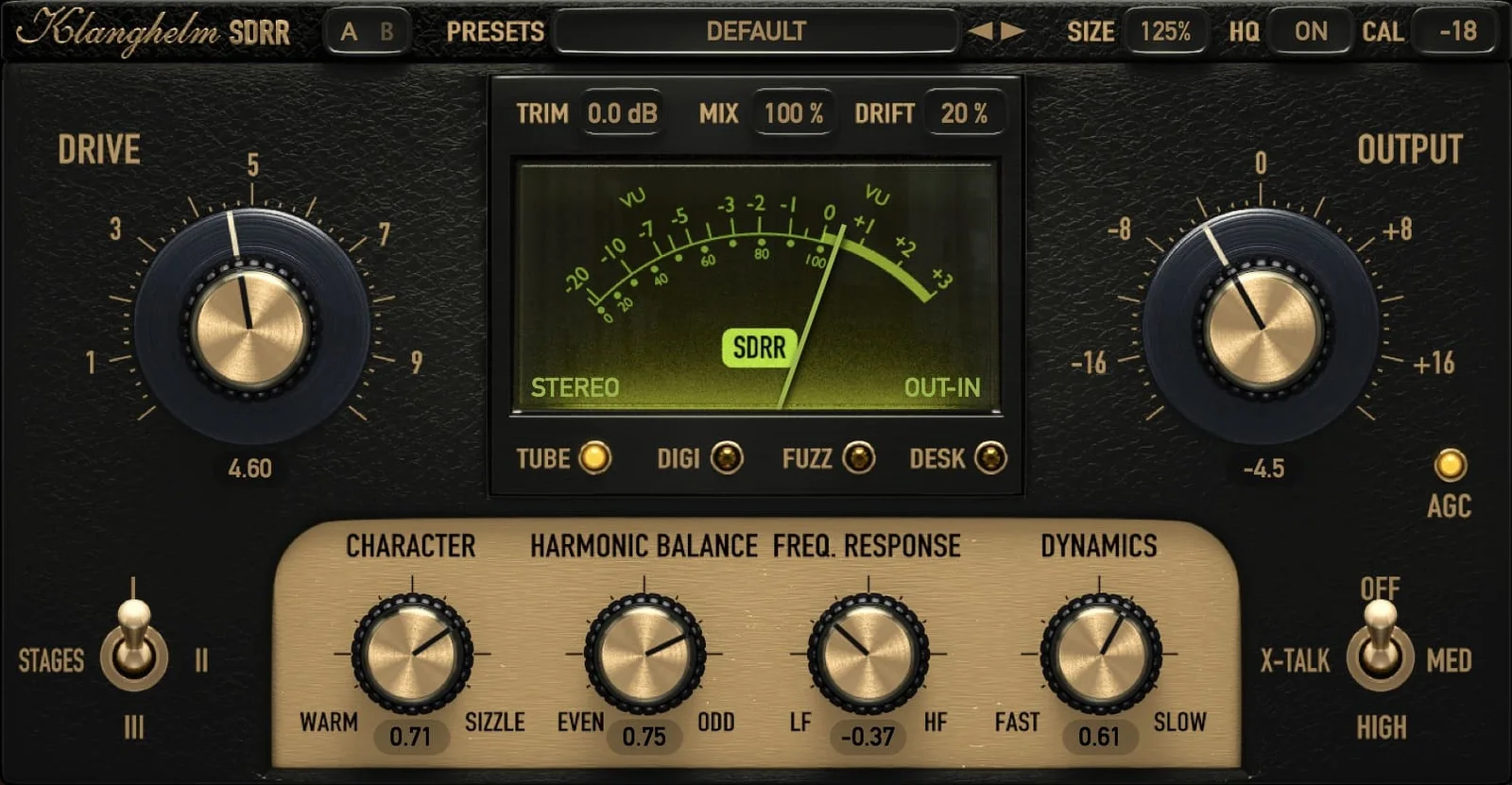
SDRR2. Image: Klanghelm 03SDRR2by Klanghelm
Saturation with four modesBest for: Valve warmth to fuzz on a budget
SDRR2’s Tube mode is a lovely bass warmer, and its Fuzz mode heads the other way, towards a pedal. One band, so use its mix or a parallel copy if the sub starts to blur.
Why pick it
- Four characters, from Desk to Fuzz
- Very low price
Know first
- Single band
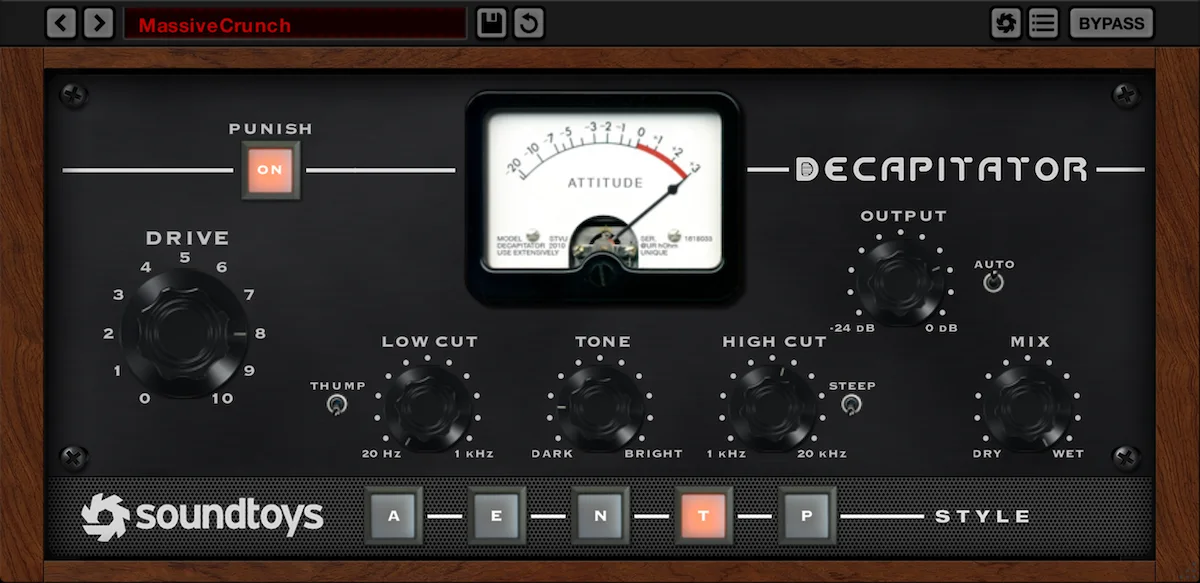
Decapitator. Image: Soundtoys 04Decapitatorby Soundtoys
Analog saturation modelerBest for: Quick, characterful drive on a bass line
Decapitator’s styles, Tone control and Mix make it fast on a bass: N for weight, P with Punish for aggression, then blend back. Its low cut and Thump switch help shape the bottom of what it adds.
Why pick it
- Fast and musical
- Mix and filters built in
Know first
- Single band: the sub goes through the curve unless you blend
- Premium list price
Premium · Regularly discounted; part of Soundtoys 5
Soundtoys's page for Decapitator (opens in a new tab)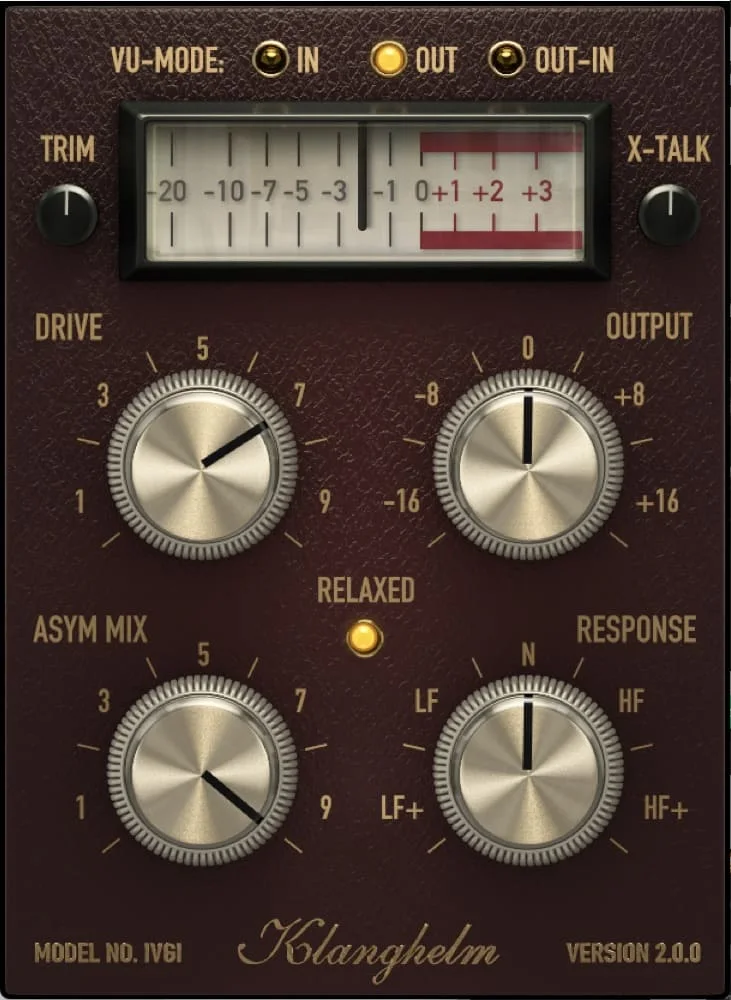
IVGI. Image: Klanghelm 05IVGIby Klanghelm
Subtle to heavy saturationBest for: A free start
IVGI goes from subtle to heavy with one control. On a parallel copy of the bass, high-passed after it, it is all the saturation many bass lines need.
Why pick it
- Free
- Wide range
Know first
- Single band
- Parallel routing is yours to do
Questions
Should I saturate bass guitar?
Usually, yes. A DI bass in particular lacks the midrange an amp and speaker would add. Saturation adds harmonics that make the bass audible on small speakers and evens out its level, so it holds its place in the mix.
How do I saturate bass without making it muddy?
Keep a clean copy of the low end. Blend the saturated bass with the dry one, high-pass a saturated parallel copy at 100 to 200 Hz, or use a multiband saturator with light drive on the low band and more above it.
What saturation is best for bass?
Transformer or tape for weight and warmth on the low end, valve for a round, melodic tone, amp or soft distortion for growl in the 200 Hz to 2 kHz range, and fuzz above 250 Hz over a clean sub for aggressive styles.
Should I compress bass before or after saturation?
Before, so the level going into the saturator is steady and every note gets the same amount of colour. A second, gentle compressor after the saturator can hold the peaks if needed.